How tree roots get into sewer lines in older Troy neighborhoods
Tree roots crack into Troy's aging clay sewer lines through joints and hairline fractures. Here's how it happens, the signs, and what removal costs in 2026.
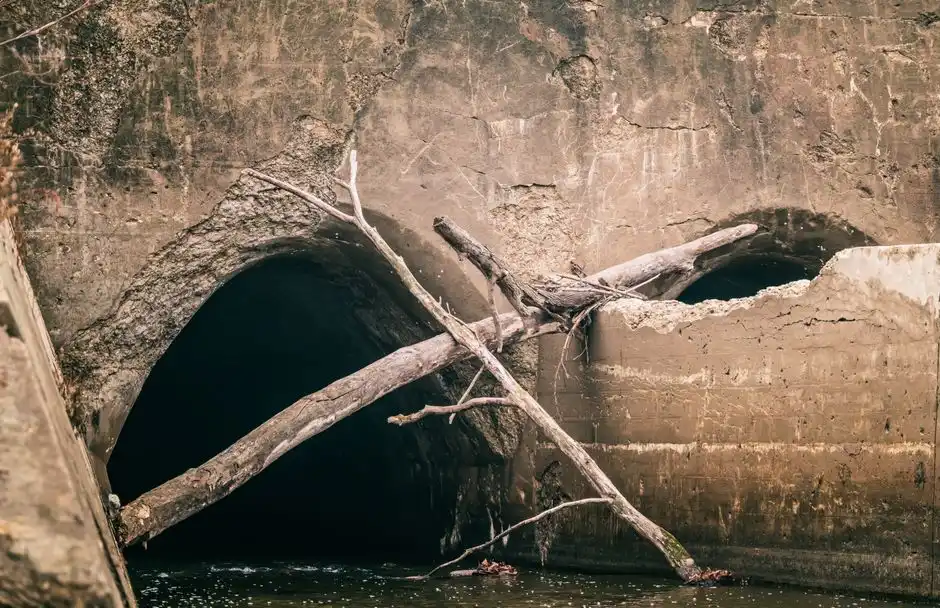
Tree roots get into sewer lines in older Troy neighborhoods through the joints and hairline cracks in aging clay tile pipe, because roots grow toward the warm, moist, oxygen-rich environment inside the line. Once a single 1/16-inch root hair slips through a joint, it feeds on the waste stream and thickens into a mat that catches paper, grease, and debris until your drain slows to a trickle. If you live in a pre-1980 subdivision off Big Beaver, Wattles, or Long Lake, this is the single most common cause of repeat backups we see, and the rest of this post covers why it happens, what to watch for, and what removal costs in 2026.
Why older Troy neighborhoods are a magnet for root intrusion
Older Troy neighborhoods are a magnet for root intrusion because the original sewer laterals were built from vitrified clay tile, a material that cracks, shifts, and separates at the joints as the ground freezes and thaws. Troy grew fast from the late 1950s through the 1970s, and most of those subdivisions still run on the same clay laterals installed when the streets were first paved.
Clay tile was the standard because it resists corrosion, but it is brittle. A root hair is thinner than a human hair and can enter a gap of 1/64 inch. Once inside, it expands against the pipe walls and the joint opens wider, which lets in more roots and more soil.
Add mature silver maples, willows, and Norway maples planted 50 to 70 years ago within 10 feet of the lateral, and you have a root system that has been probing that pipe for decades. We see this constantly in the neighborhoods around Troy High School and in the streets between Rochester Road and Livernois. Homeowners who call us for Drain Cleaning Troy MI often assume the problem is grease, and they are surprised when the camera shows a root mass at the 30-foot mark.
How tree roots actually get into a sewer line
Tree roots get into a sewer line by growing toward the moisture and warmth escaping from a failing joint, then forcing their way through the smallest opening they find. The process is slow and relentless, and it happens in four stages.
- Attraction: Sewer lines carry warm water and organic waste, so the soil around a cracked pipe stays warmer and wetter than the surrounding yard. Roots follow that gradient.
- Entry: A root tip enters through a joint, a hairline crack, or a break caused by ground movement. It does not need a visible hole.
- Establishment: Inside the pipe, the root branches into a mass that catches toilet paper, grease, and sludge. The mass grows every time you run water.
- Blockage: The mat narrows the pipe until waste cannot pass, and you get a backup in the lowest fixture in the house, usually a basement floor drain or laundry tub.
Tree root intrusion in Troy, Michigan is not limited to one pipe material. Orangeburg, cast iron, and PVC all fail in different ways, but clay is the worst offender because every joint is a potential entry point. If your home was built before 1980 and still has the original lateral, assume the joints have opened.
Signs of tree roots in sewer lines in Troy MI
Signs of tree roots in sewer lines in Troy MI show up long before a full backup, and catching them early is the difference between a $350 cleaning and a $6,000 lateral replacement. Watch for these:
- Slow drains throughout the house. When every sink and tub drains slowly at once, the blockage is in the main line, not the trap.
- Gurgling toilets. A toilet that gurgles after you run the washing machine is pulling air through a partially blocked line.
- Foul odors in the basement. Sewer gas escaping through a root-damaged joint smells like rotten eggs.
- Soggy patches in the yard. A greener, spongier strip of grass over the sewer path means wastewater is seeping into the soil.
- Repeat backups in the same spot. If you snake the line every six months, roots are regrowing at the same joint.
We recommend a Sewer Camera Inspection Troy MI the first time you notice two or more of these signs. A camera tells us exactly where the roots are, how much of the pipe they occupy, and whether the line is cracked or just infiltrated. That 30-minute inspection saves guesswork and money.
How do I remove tree roots from my sewer line in Troy, Michigan?
You remove tree roots from a sewer line in Troy, Michigan by cutting them out with a powered auger or a high-pressure hydro jetting unit, then flushing the debris out of the line. Hand snakes and store-bought root killer are temporary at best.
Here is how the two professional methods compare:
- Mechanical auger (rooter): A steel cable with a cutting head spins through the line and slices the roots at the pipe wall. It clears the blockage fast, but it leaves root tips behind that regrow within 12 to 24 months.
- Hydro jetting: A hose delivers water at 3,000 to 4,000 PSI and 12 to 18 gallons per minute, scouring the pipe walls and flushing roots, grease, and scale out through the main. It cleans the full diameter of the pipe, not just a channel through the middle.
For root masses, we almost always recommend Hydro Jetting Troy MI because it removes the roots and the sludge they trapped in one pass. On a 4-inch clay lateral with moderate root intrusion, the job takes 60 to 90 minutes. If the roots have cracked the pipe, jetting alone will not fix it, and we will show you the camera footage before we recommend anything further.
After the line is clean, we can apply a foaming root inhibitor that kills regrowth on contact and leaves a residual in the pipe. It is not a permanent fix, but it buys you 12 to 24 months between cleanings.
What root removal costs in Troy in 2026
Root removal in Troy in 2026 runs from about $275 to $650 for a standard cleaning, depending on the method and how far the roots have spread. Here is what we see on real invoices this year:
- Sewer camera inspection: $150 to $350, often waived if you book the cleaning the same visit.
- Mechanical root cutting: $275 to $450 for a single-story home with a 50- to 75-foot lateral.
- Hydro jetting: $400 to $650 for root and sludge removal in a 4-inch line.
- Root inhibitor treatment: $75 to $150 added to a cleaning.
- Lateral spot repair: $1,800 to $4,500 if the camera shows a cracked or collapsed section.
- Full lateral replacement: $6,000 to $12,000, which is why we push for early detection.
We give you the price before we start, and we do not add line items after the fact. If the camera shows the line is too damaged for cleaning, we tell you that on the spot and credit the inspection toward whatever you decide next.
One more number worth knowing: Troy's average frost depth is around 42 inches, and the freeze-thaw cycle that cracks clay tile happens every winter. That is why we get a wave of root calls each spring, and why fall is the smart time to clean a line before the ground moves again.
Common mistakes we see homeowners make
The most expensive mistake is treating a root problem like a one-time clog. Roots do not go away because you snaked the line once.
- Using chemical drain cleaner. Caustic cleaners do nothing to a root mass and can damage older pipes. They also create a hazard for the technician who opens the cleanout later.
- Snaking the same line every few months. If you are renting a auger twice a year, the roots are regrowing and you are paying for the same job over and over.
- Ignoring a soggy yard. A wet patch over the lateral means the pipe is already leaking. Waiting turns a $400 cleaning into a $6,000 replacement.
- Planting the wrong tree. Willows, silver maples, and poplars have aggressive roots. Keep them at least 20 feet from the lateral if you are planting this fall.
We also see homeowners in neighboring cities deal with the same clay pipe. If you are just over the border, our Drain Cleaning in Royal Oak MI team handles the same root issues in the same era of housing stock.
When to call a professional
Call a professional the first time you get a backup that returns within 30 days, or any time you see two or more of the warning signs above. A rented auger can punch a hole through a root mass, but it cannot tell you whether the pipe is cracked, and it leaves the roots in place to regrow.
Our technicians run a camera before and after every root job, so you see exactly what we removed. We handle Sewer Line Cleaning Troy MI for laterals up to 200 feet, and we work in the older neighborhoods where clay tile is still common. If you are dealing with a backup right now, our Emergency Drain Cleaning Troy MI line is answered 24/7.
Frequently Asked Questions
How do tree roots get into sewer lines in Troy MI?
Roots enter through the joints and cracks in aging clay tile laterals, which are common in Troy homes built before 1980. The warm, moist environment inside the pipe attracts roots, and a tip thinner than a hair can slip through a 1/64-inch gap and grow into a full blockage within a few years.
How do I remove tree roots from my sewer line in Troy, Michigan?
Professional removal uses a mechanical cutting head or hydro jetting at 3,000 to 4,000 PSI to cut and flush the roots out. A 60- to 90-minute service clears a typical 4-inch lateral. Chemical drain cleaners and hand snakes do not remove the root mass or stop regrowth.
Can hydro jetting remove tree roots in Troy MI?
Yes. Hydro jetting removes tree roots and the sludge they trap by scouring the full pipe diameter at 3,000 to 4,000 PSI. It is more thorough than snaking for root masses, and most Troy laterals are clean after one 60- to 90-minute pass. Severely cracked pipe may need a spot repair instead.
How much does tree root sewer cleaning cost in Troy MI?
Expect $275 to $450 for mechanical root cutting and $400 to $650 for hydro jetting in 2026. A camera inspection runs $150 to $350 and is often waived with the cleaning. If the pipe is cracked, spot repair starts around $1,800.
Do root treatments keep roots from coming back?
A foaming root inhibitor applied after cleaning kills regrowth on contact and leaves a residual in the pipe for 12 to 24 months. It is not permanent, but it extends the interval between cleanings and costs $75 to $150 as an add-on.
Get help with Drain Cleaning in Troy
If your drains are slow, your basement smells, or you have snaked the same line twice this year, the roots are still there. We will camera the line, show you the footage, and give you a flat price before we start.
Call Troy Drain Pros at (248) 691-5596 to schedule root removal or a sewer camera inspection anywhere in Troy.